We started with 4, got a few more, and now have 10 hens and a rooster roaming in our suburbanish backyard.
I've gotten a few questions, so here are a few answers. Keep in mind that this information comes from a lot of sometimes questionable internet research, and less than a year of actual chicken-keeping. We also treat our chickens more like pets than someone with an actual farm might. These are some things I've learned from my experience, but certainly is not the only or best way to do things.
All chicken related posts can be found here.
Okay! Without further ado:
Isn't it illegal to have so many chickens in the suburbs?
Maybe! It depends on where you live, so you'll have to check your local city ordinances. Honestly, though, we didn't do that... do as I say, not as I do. We live on about 3 acres in a part of town that is not exactly in a suburban neighborhood, but not exactly rural. We have a fair amount of privacy, and we know that our neighbors have about a half a dozens hens roaming around, so we went for it and so far things have been fine. Roosters can be more troublesome, what with the noise, so keep that in mind.
Where did you get them?
For the first four, we went in on an order with my aunt, who's been keeping chickens for 20 years or so. She picked the breeds, and this batch came sexed so we knew we were getting hens. The second batch we got was a bit more random, but also from my aunt. Some she incubated and hatched at her school, and some she ordered.
You can place an order with your local farm supply store, usually in early spring, and go pick them up when they arrive. You can also order chicks online (seriously, you can order anything online) and they get shipped to you. You need to be sure you're around to get them, usually they'll go to your post office and then you go pick them up there.
Where do they live?
Our house came with two 16x16 sheds in the backyard. We simply chose one, framed out a 3-sided box about halfway between the door and the back wall, and covered the framed-in box with chicken wire.
If you're building one from scratch, you can find hundreds of awesome plans with cool tricks and gadgets and things to make your life easier submitted by users and organized by size over at BackyardChicken.com.
Basically, they need well-ventilated shelter from weather and predators, food and water, a roost or two, and nesting boxes. There are a million ways you can put that together.


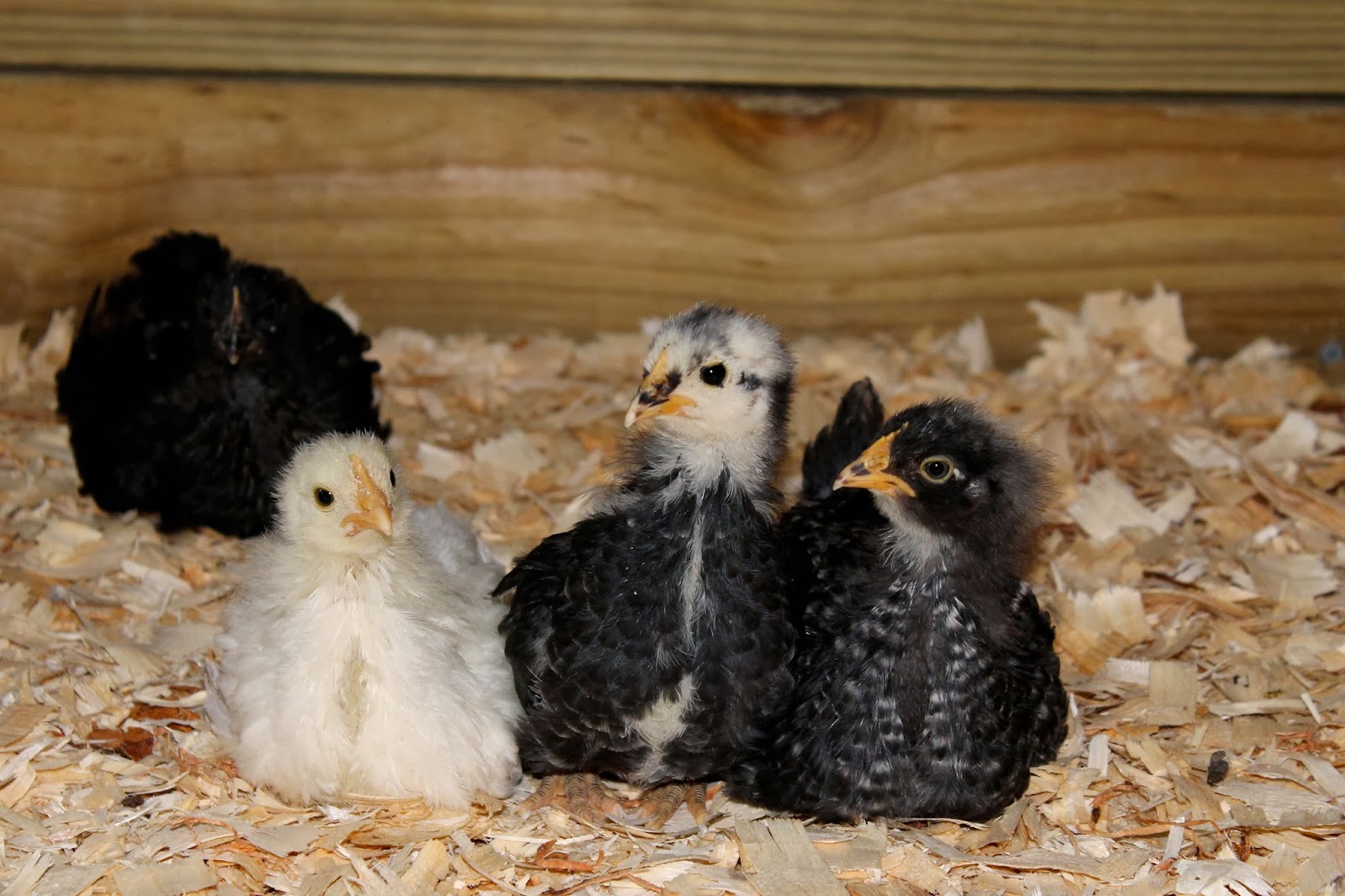
Where do they live when they're babies?
When they're brand new chicks, they need a little more attention. They require heat (via a heat lamp) and some kind of smaller enclosure (called a brooder) so they don't wander off or get attacked. This can be super simple. We used one of those large rubber bins, like that you might store Christmas decor in or something. We placed an old window screen on top to discourage jumping out (which could happen when they're a little older - a few weeks - and stronger). We kept this in the building with the coop, but not in the coop.
You should also check on them a few times a day to make sure they're not too hot or too cold, that they haven't drowned in their waterer, or whatever. If you want super friendly chickens, you can start holding them whenever you check on them and if you do this consistently, you should get pretty nice birds. (I told you we treated ours like pets.)
How long they stay in there depends on a few things: how many chicks you have, if you already have older chickens, how cold it is. We did a lot of reading and read a ton of contradictory things, so my best advice would be to just use your gut. When their feathers are mostly in and they seem like they're keeping their body heat without the lamp, that's probably a good time to move them to the coop.
There are also a lot of articles out there about exactly how hot they need to be kept and I'll say that we were not that exact about it. You can tell by looking at them if they're cold. Just be sure that the heat lamp is not so close to them that they might burn themselves on it.
Also, about introducing younger chicks to older chickens: our "younger" chicks are only about a month younger than our older ones, but at that stage a month is a big difference in size. Again, kind of use your gut here. We felt like because our older gals were not so established, it would probably be safe to combine them immediately. We put the new chicks (who were already about 4 - 5 weeks old, and at this point it was staying right around 55° - 60°F at night) right in the coop and while the older ones were a little suspicious, we didn't have any fighting. Also, our 4 older ones stay in one pack, and the younger ones stay in another, even now.


How much space do they need?
Our indoor coop area is approximately 8x16 feet, or 128 square feet. Most sources recommend planning for about 4 square feet per chicken, which would mean we would (at a minimum) need 48 square feet. As you can see, we have more than enough space for 12 chickens. We figured that we have the space, so we would give it to them. More space = happier chickens.
We let our chickens roam the yard, so we didn't plan any outdoor run area, but as a guideline your outdoor space should be at least as big as your indoor space.
You let them run around your yard? Don't things try to eat them?
Yes, they run around the yard. Most days we let them out at around noon, which gives them plenty of time to lay eggs in the morning inside the nesting boxes, rather than finding a hiding spot outside. When we got them, we kept them inside the coop for about a week, to let them get the idea that the coop is a safe, dry place where they have a constant supply of food and water. Now, they tend to stay close to the coop even when they're outside, and every night like clockwork they scramble back inside and settle themselves down to roost.
When we were very new chicken owners and were a bit more wary of letting them out, we would sit outside for an hour or two then try to round them up and get them back inside. This lasted for about 3 days and was pretty stupid, as chickens are pretty difficult to catch when they're outside. Just let them be, and they'll find their way home at night.
And no, nothing has tried to eat them. Knock on wood. We do live in a pretty populated area, and things like foxes and hawks generally stay away with so much people activity happening. However we definitely make sure they are locked up at night, and so far this seems to be working.
Also, we do not live on a farm, or anything like it. In fact, we have a pretty nicely landscaped backyard. The chickens peck around in the grass and dig around in the mulch, but so far haven't destroyed anything (hurray!). One thing to be aware of, especially in the suburbs, is that things like lawn fertilizers or chemical sprays etc. will be ingested because chickens run around pecking at everything. Duh. So if you're planning on letting your chickens run around, don't use them! They may kill them, or at the very least, those chemicals are going to end up in your eggs and you don't really want that, do you?


What kind of bedding do you use?
Pine shavings! We pick up a few bales at the Paris Farmers Union whenever we go by.
We use the deep litter method, so we spread about 2 bales down as a base, and every other day or so we turn the bedding over and sprinkle a fresh layer down. The idea behind this is that the old bedding and chicken poop decompose, which you can then use directly as compost, or can put into your compost pile if it needs a little more time.
We do a complete coop clean out once every 6 months. This method saves a ton of time, and you're left with some really nice compost. We haven't had any odor issues.
Really? You clean your coop only twice a year and it doesn't stink?
Yup, really!
I mean, it smells like a chicken coop, but a nice smelling chicken coop. Like, farmy but not poopy.
We also have a "coop freshening spray" which makes everything smell really lovely. We use this recipe.
What do they eat?
We feed them Blue Seal OrganicLife feed. There are basically three varieties of feed that are given at different stages of the chicken's lifecycle: starter (0-8 weeks), grower (8-20 weeks), and layer (from the time the first egg is laid onward). These timelines may vary slightly from brand to brand, but it should say right on the bag what the recommended timeframes are. We also introduced each new feed slowly, so at about 7 weeks we did a mix of starter & grower, gradually adding more grower until that's all they were eating.
They also love scraps! We give our chickens all kinds of fruits and veggies, with a couple of exceptions. Check this list for a few things that they shouldn't eat. Make sure you're not giving them so many scraps that they aren't eating their feed, which contains lots of needed nutrients.
They also need grit! Chickens digest their food by way of a muscle called a gizzard. They eat rocks and sand, which are stored in the gizzard and assist in breaking down and grinding up food particles. If you have lots of sand and dirt in your yard that the chickens can get at you probably don't need to supplement this, but we do just incase.
We have a little dish where we put grit (find at any farm supply store), oyster shells (for calcium, which helps build healthy egg shells), and some garlic granules (helps them maintain a healthy digestive and respiratory system and for resistance to internal parasites and mites). The garlic is definitely not mandatory, but an ounce of prevention, right?
We simply keep their feeder full all the time. They're good at self-regulating. We fill it about once a week, and even then it never gets completely empty.
With water, we rinse out and refill the trough every couple of days or when we notice the rim part is getting especially dirty.
It's a good idea to keep their feeder and waterer off the ground. Chickens are super inquisitive and peck and scratch at everything, including their bedding, which gets flung around and is full of poop that gets all up in their food and water. Yuck. Our feeder hangs from the rafter and the waterer is on a couple layers of bricks. We use the 30 pound capacity version of these.
Tell me about the eggs! How many do you get every day?
Our girls laid their first egg at approximately 4 months old, though this will vary from breed to breed.
We did some research and decided to go with these plastic nesting boxes because they're easy to install and very easy to clean. General knowledge tells us that you should plan on 1 nesting box per 4 hens, and as always, better to have too many than too few. We decided to get 4 for our 12 hens and this seems to be working out. All boxes are being used equally.
We have them placed low to the ground for a couple of reasons: apparently hens like laying eggs low to the ground, and this discourages roosting on the boxes because our roots are higher than the boxes and chickens like to be higher than other chickens.
On average, a chicken will lay 2 eggs every 3 days. This again varies from breed to breed.


What's this about roosting?
Chickens sleep balancing on a roost. At night when they're all settling in it's pretty entertaining to watch them sort themselves out. This is where you can usually see what kind of pecking order they've got themselves in.
They don't need to be super big, each chicken will require maybe 4-6" of horizontal space. We used a couple of 2x4's that seem to work well. I also made this little ladder to get up to the first roost because we have a couple of Silkies, which are small and not very good flyers.


Do they get cold in the winter?
Not usually. We live in the coastal Maine area, where temps in the winter are on average 20° - 30° F. They are birds, after all, and plenty of birds live wild in the winter. This winter has been especially frigid with the whole polar vortex thing, with temps dipping into the negative temperature, and they've been fine. We leave the door open so they have the option to go outside but they rarely do. Not sure if they're wary of the snow or the cold or both, but they seem happy enough.
That said, we do a few things to make sure they're comfortable: the deep litter method we use actually produces a tiny bit of heat, we have a light that's used mainly for the light part but also emits a little heat, we keep the windows mostly closed, and we do use a heated base for their water heater to avoid frozen water (also known as ice!).
Egg production also slows down in the winter. FYI.
Are you making a profit on their eggs?
Nope! Not at all. We of course don't have to buy eggs from the store, but we spent like $4 on that a week and while I'm not sure what we spend on a weekly basis for feed and bedding, I'm willing to bet it's right around there.
Also, I'm pretty sure we haven't recouped the cost of building out the coop, though you could definitely have done that for less than we did.
We also don't sell our eggs anywhere (which makes it hard to make a profit, hmm?). We give our extra to neighbors and friends.
What breeds do you have?
All sorts. We just think chickens are cool, we're not out to get the most eggs we can or show them or anything like that. We did do a little research to make sure these particular breeds "bore confinement well" and were well-suited for the colder months.
Here's a run down of our current flock!
EDIT: Actually, a few of those guys are now gone to chicken heaven. Farewell Daisy, Penelope, and Kramer. You all ended up being super noisy dudes and I'm sorry that we weren't able to find you more suitable homes.
Anything else?
Um. Nope. That's everything I know about chickens. And I know I left things out, but you can and should certainly do more extensive research around the interwebs before your foray into chicken keeping!